
Available for opportunities

Hi, I'm Franco Leone

Game & Full Stack Developer

Building interactive gaming experiences and high-quality web applications

ReactTypeScriptUnityNode.js

About Me

Franco Leone

I'm a Game Developer & Full Stack Developer with strong capabilities in both game and web/app development.

Advanced proficiency in Unity with C#, having built multiple systems, tools, and gameplay mechanics. Currently expanding my engine expertise with Unreal Engine (C++).

Skilled in building complete web and mobile applications using modern technologies and frameworks, with solid experience in database integration and API development.

Driven by a deep passion for interactive technologies, game design, and modern software development, with a strong commitment to delivering high-quality digital products across both fields.

15+
Gameplay Systems
12
Web Projects
25+
Technologies

Game Development

A featured game, individual gameplay systems, and the editor tools I build to speed the work up.

Featured Game

Memora - Horror Game Demo
1 / 9
UnityIn Progress

Memora - Horror Game Demo

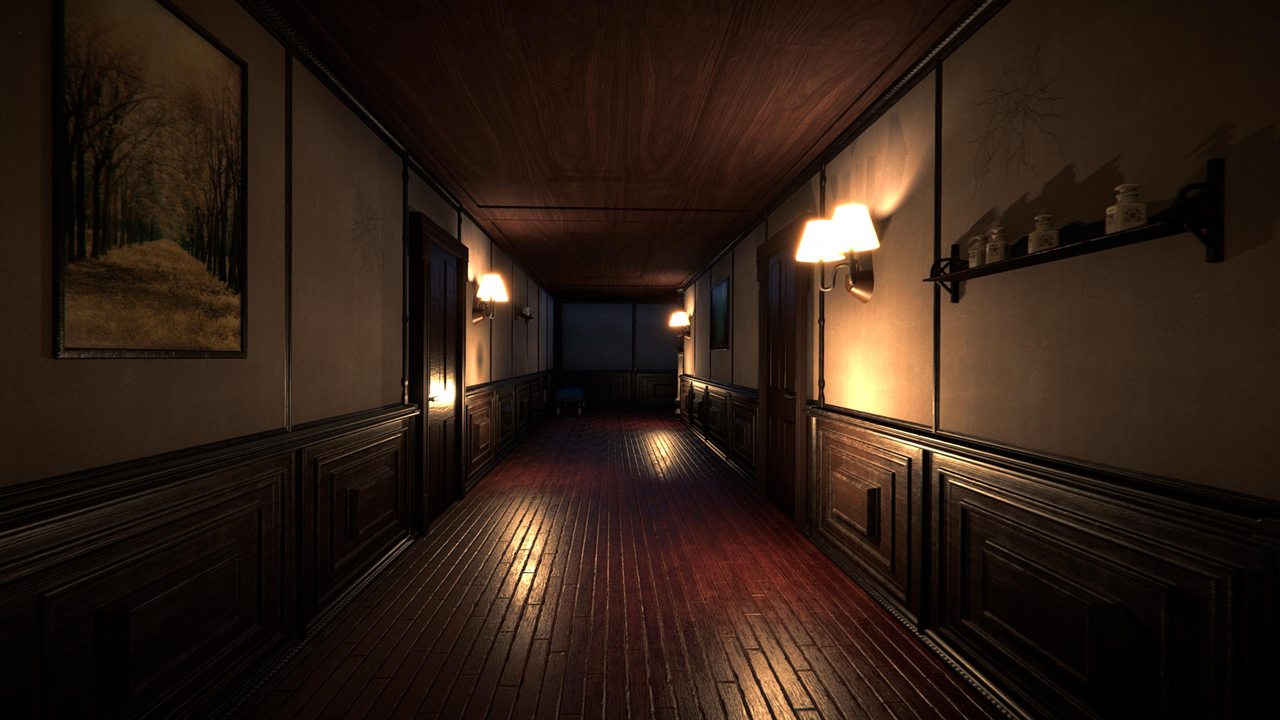
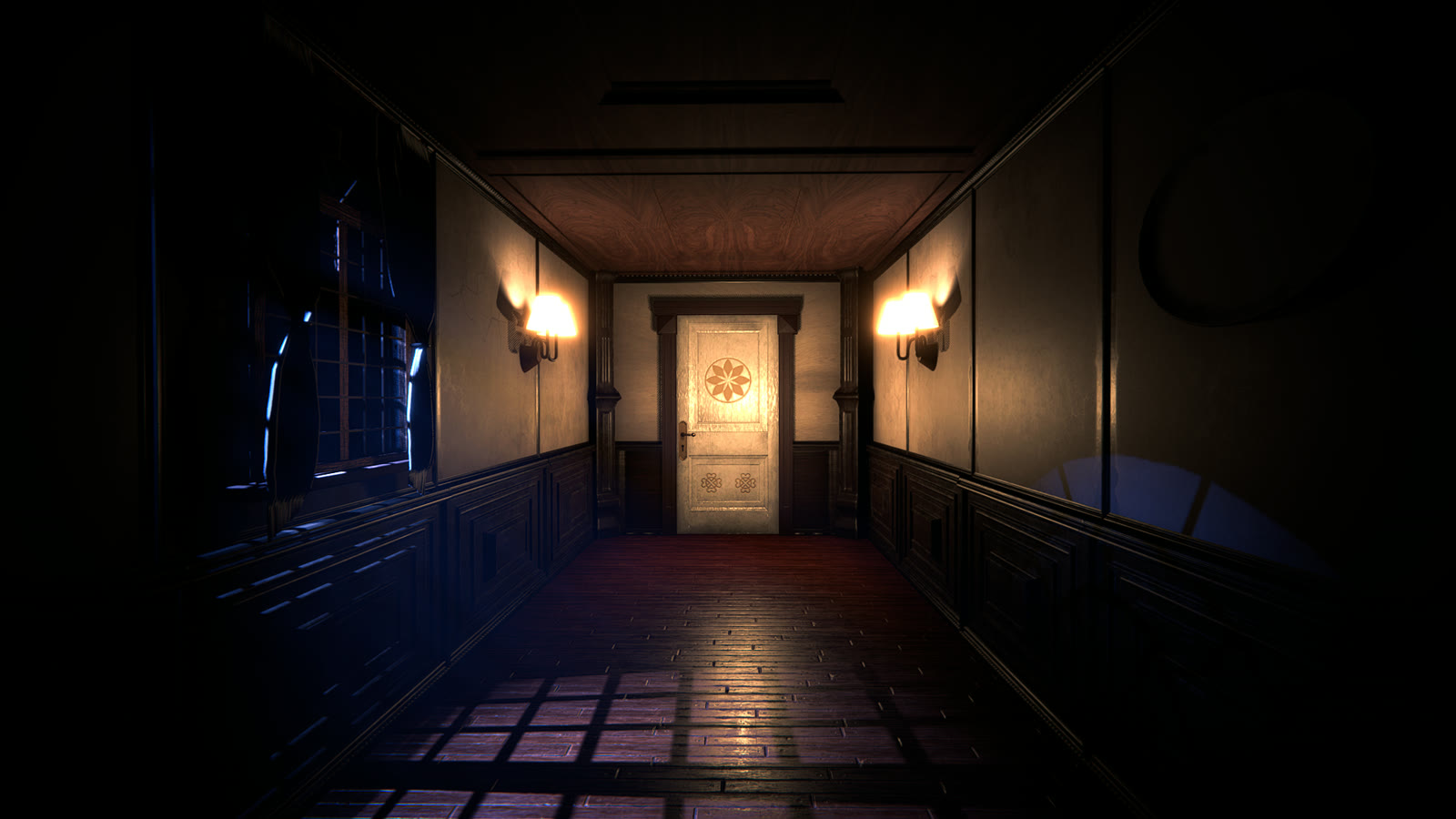
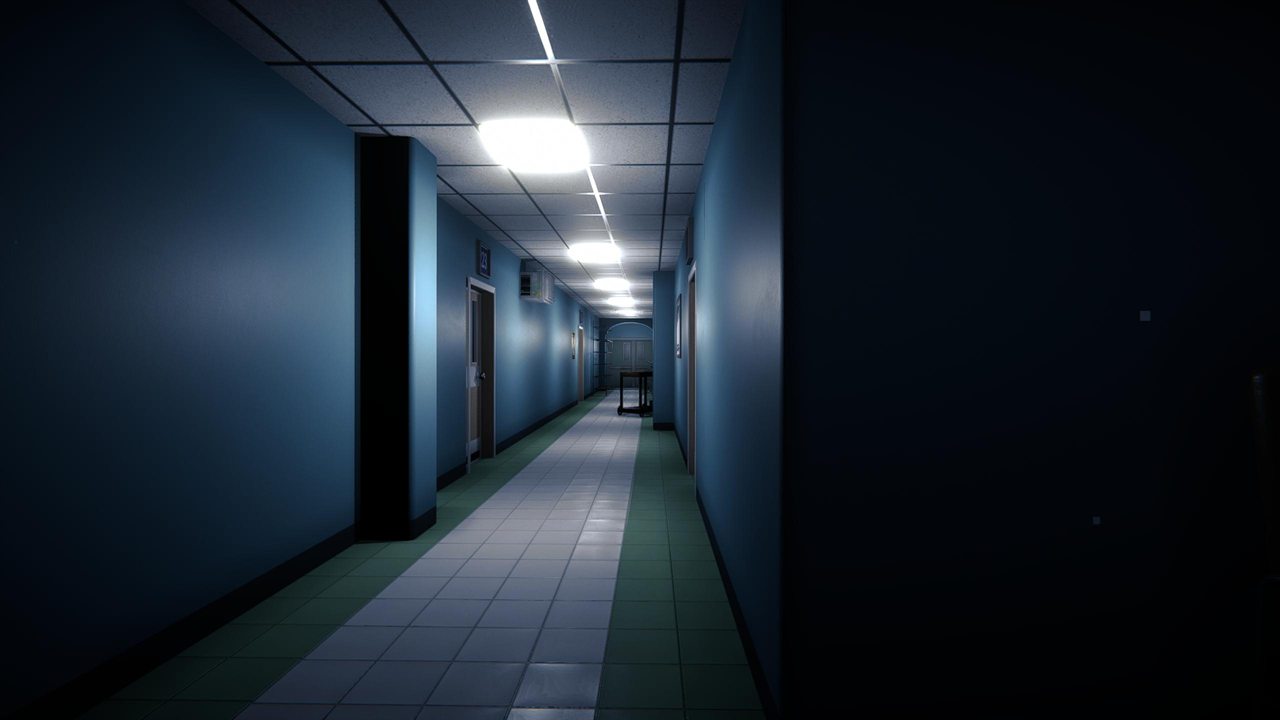
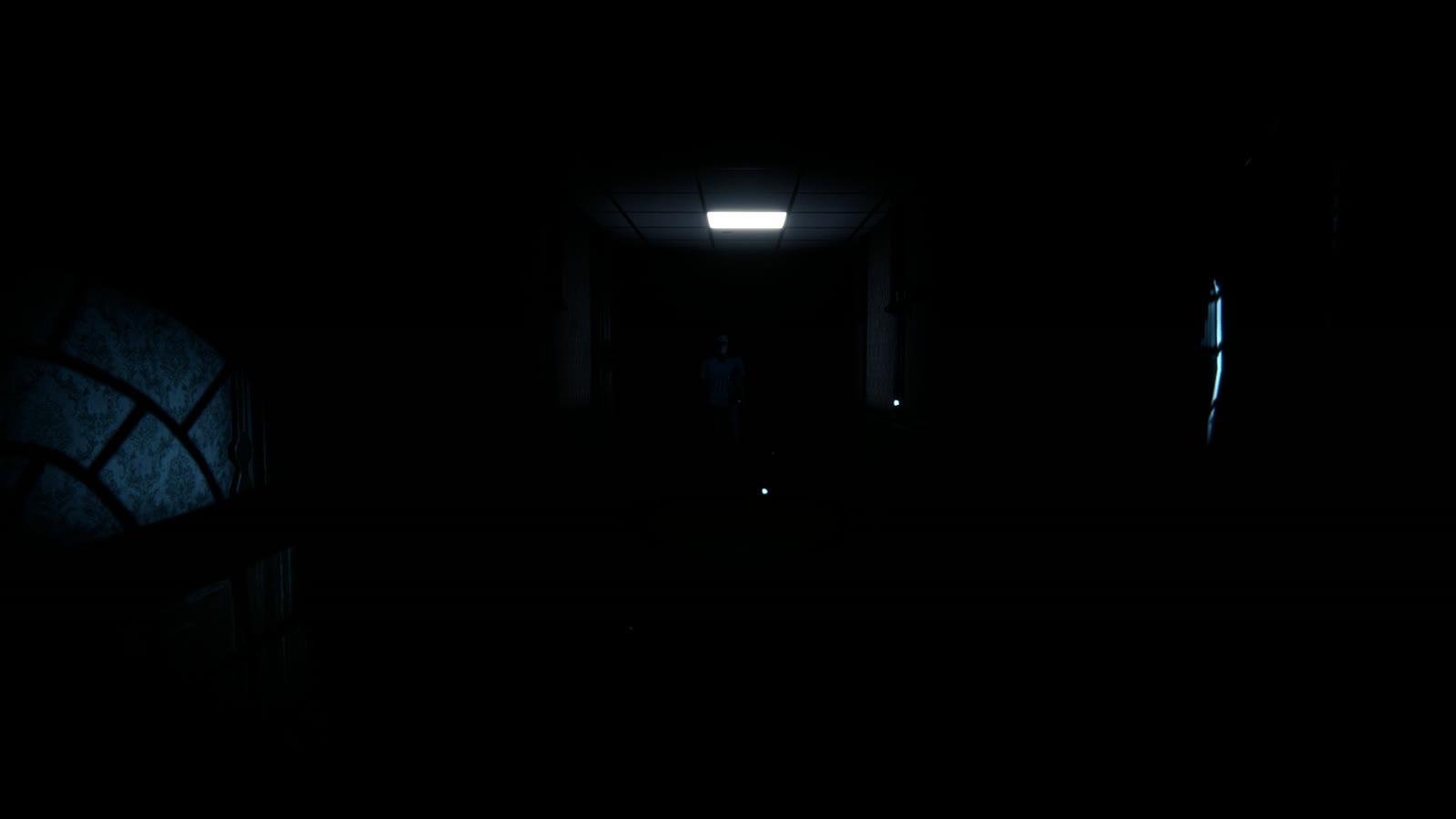
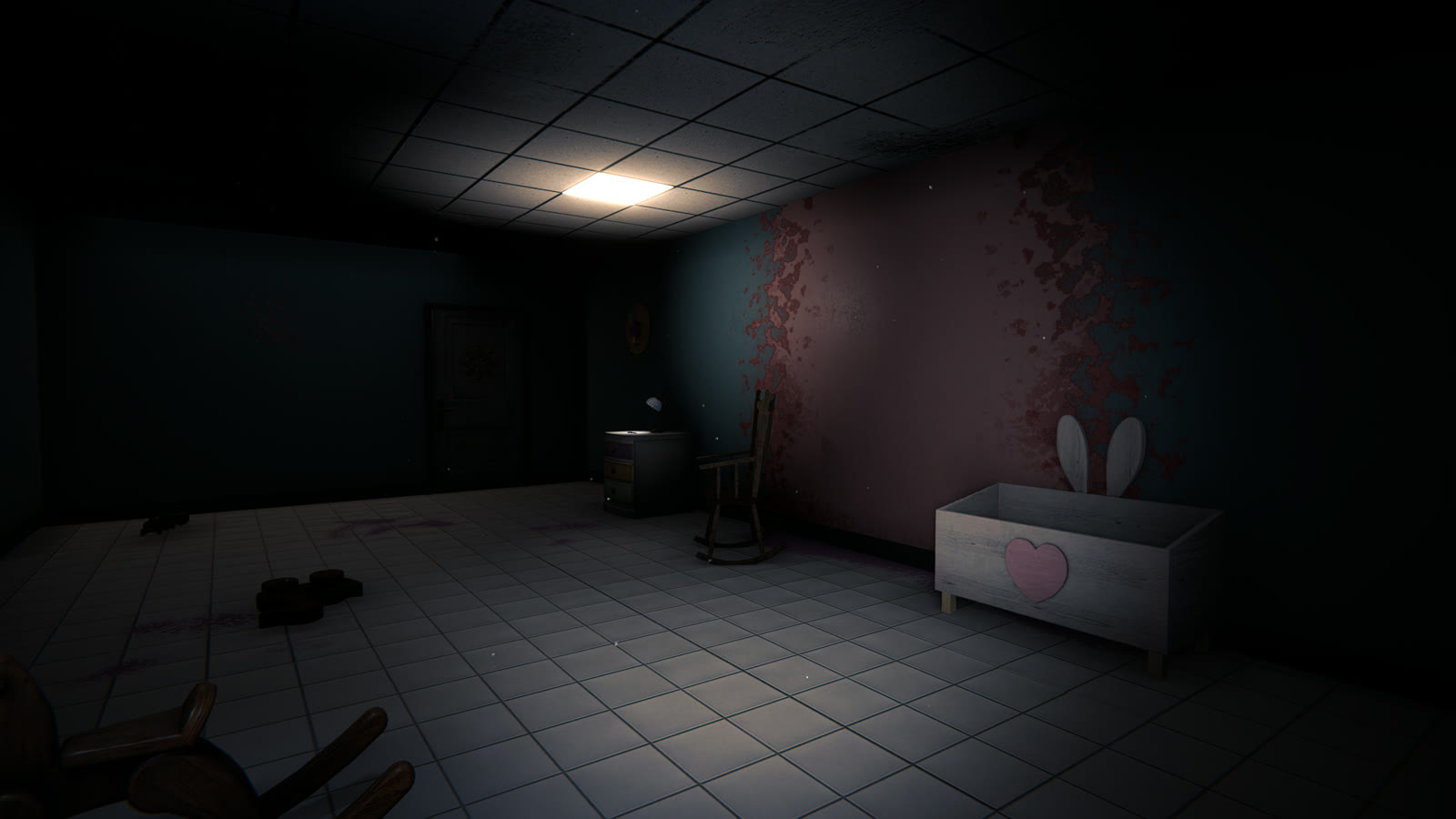
A 90s-era horror game in Unity, in development: a mansion and a hospital to explore, built around old photographs and the memories kept inside them. The puzzles live in the places themselves and the horror events are staged around them. The cards marked Memora further down this section are the systems that make it run.

C#Game DevelopmentHorror
Play the demo
In development

ListOf20

A detective and deduction game: you arrive at a mansion holding twenty bodies and have to work out, from the guest list, who each one is — whether they were murdered, by whom, and the cause of death. The investigation board is where you photograph what you find and build your own conjectures.

Early prototype — no visual material to show yet.

See the system already built

Multiplayer

Networked prototypes in Photon Fusion — the same prototype under both of Fusion's topologies, so the netcode decision is the thing on display.

01Four clients in one match: the shield bubble and the muzzle flash appear in all four views at once.

UnityHost / Client

Fusion Arena

Online last-player-standing arena for four players, built with Unity and Photon Fusion 2. Movement, fire, dash and shield all travel through a single tick-aligned input struct; transforms sync via NetworkRigidbody3D and projectile lifetimes run on TickTimer rather than Unity's own clock. Runs on Fusion's Host Mode with the host as sole state authority — the authoritative counterpart to the Shared Mode architecture in Prototype-Network-Fusion-Shared — verified with four simultaneous clients.

C#Photon Fusion 2NetworkingState Authority

01Four clients running the course at once, with no host arbitrating: every peer holds authority over its own player.

UnityShared Mode

Fusion Obstacle Course

Online multiplayer obstacle-course racer built with Unity and Photon Fusion 2. Four hazard types — sweeping obstacles, moving platforms, blinking walkways and collapsing floors — each replicated with the mechanism that fits it: NetworkTransform, networked physics or RPCs. Runs on Fusion's Shared Mode with no authoritative host — the peer-to-peer counterpart to the Host Mode architecture in Prototype-Network-Fusion-Host — verified with four simultaneous clients.

C#Photon Fusion 2NetworkingState Replication

Gameplay Systems

Individual gameplay systems built in Unity (C#) and Unreal Engine (C++).

UnityMemora

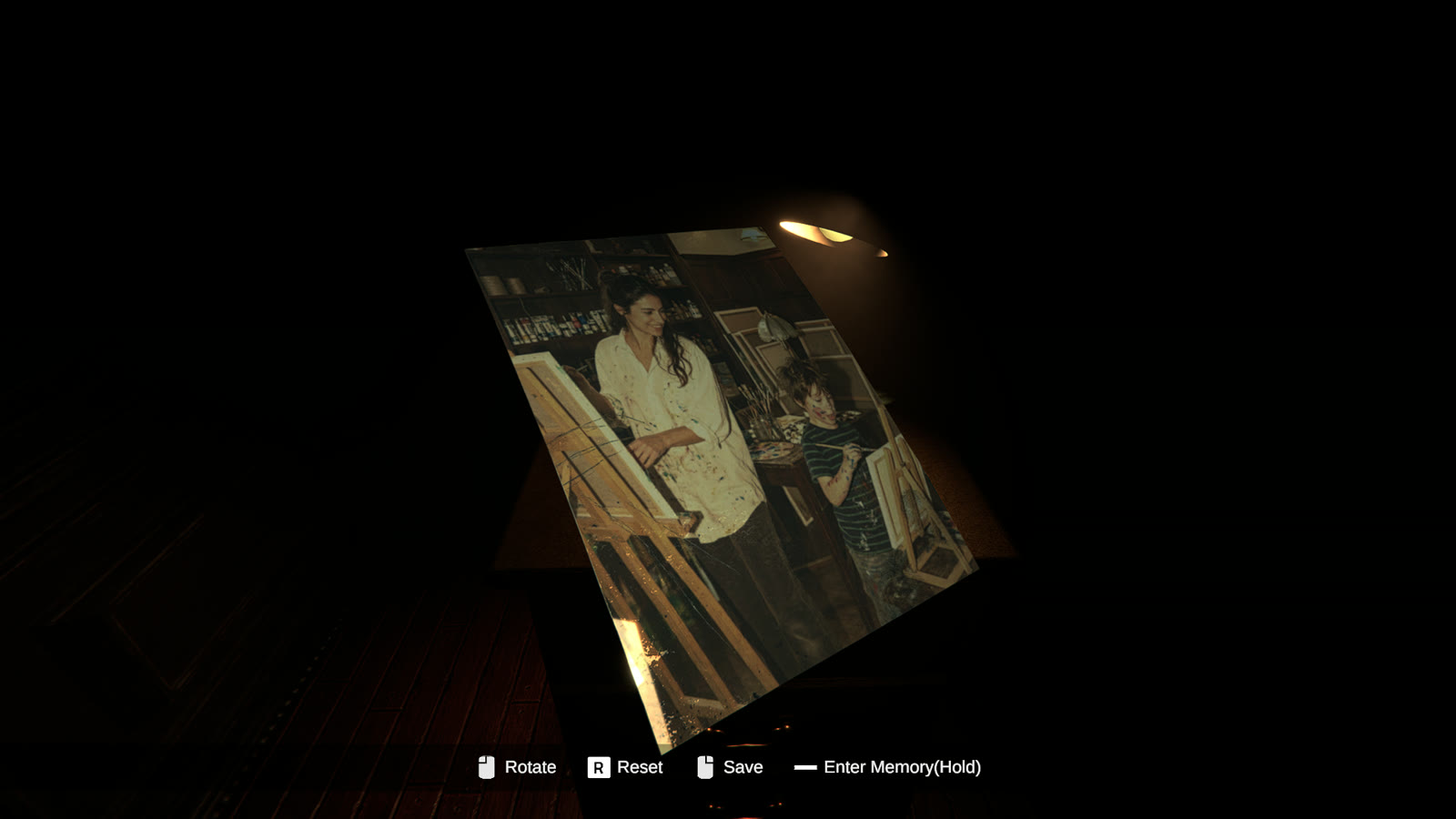
Memory Dive System

Memora's core mechanic, in Unity (C#): you look at a photograph, hold for three seconds, and you are inside the memory. Through the hold an HDRP custom pass runs a four-stage grade — peripheral vision opens up, the world drains of colour until the photograph is the only living thing left, and at the end everything floods to white — while a custom shader tears a crack of light open in the paper. The light coming out of that crack is not a screen effect: it is a real volumetric point light that lights the room and pulses at 1.5 Hz, in sync with the core of the crack. Past the point of no return, the memory's scene loads additively with its own arrival grade.

C#HDRP Custom PassShadersAdditive Loading
UnityMemora

Document Reading System

A note and document reading system in Unity (C#): the paper never moves, and it never teleports into the player's hand. The camera fades to black, reappears in front of the document where it actually sits, and comes back the same way, with a side panel holding the transcription and the inspection light on for dark rooms. The core decision was to never interpolate the camera — every move is a fade over an instant teleport, because in first person a camera lerp the player does not control reads as sloppy and makes people queasy. It replaces three earlier systems with one.

C#First-Person CameraUI
UnityMemora

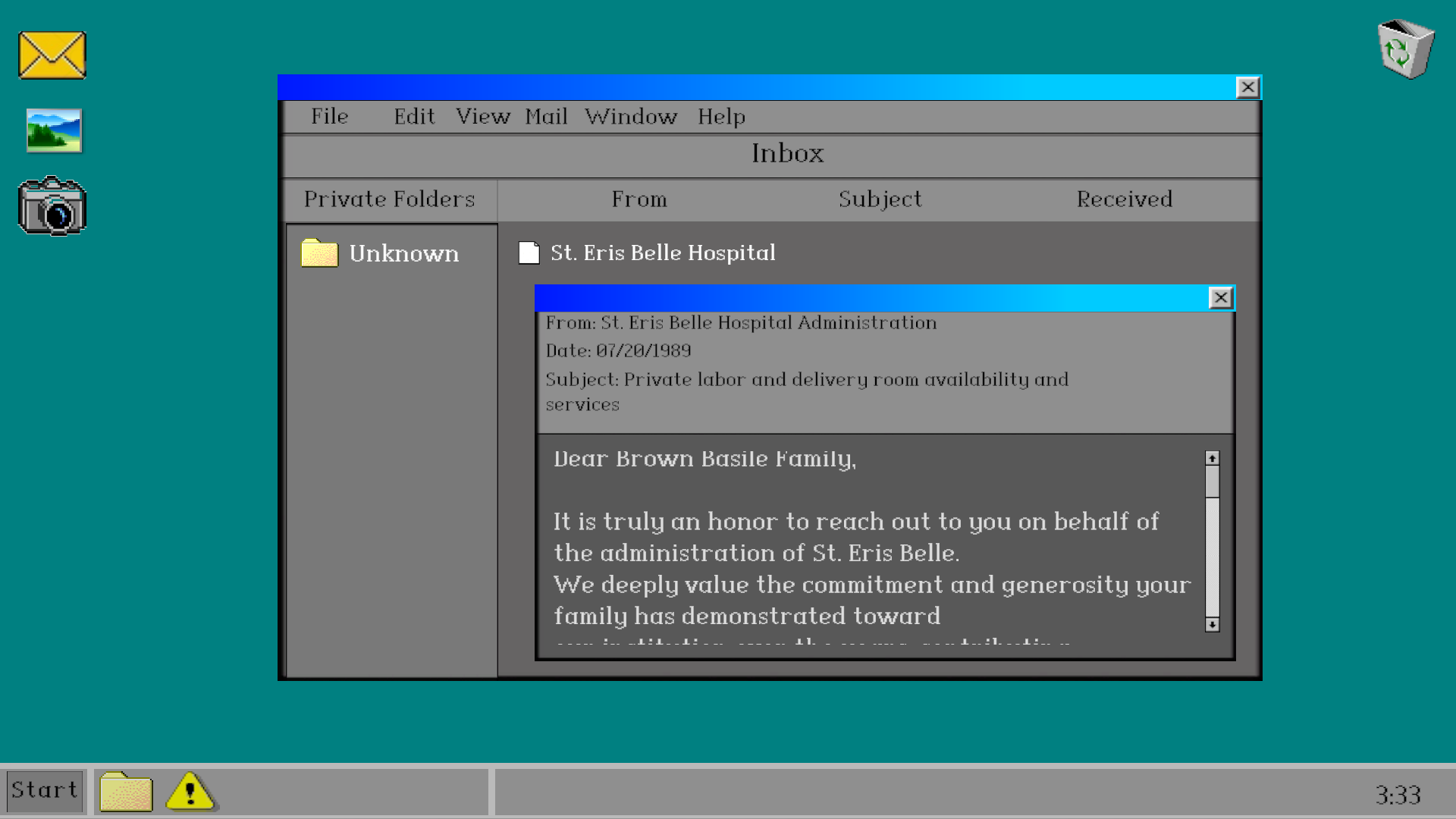
In-Game PC System

A working computer inside the game, in Unity (C#): you sit down, it boots with its own sound, the screen swaps material and lights the room, and it asks for a password you work out by exploring the house. Inside there are mail and photo sections and a security-camera circuit that renders real cameras from the scene, each with its own feed. The whole desktop — windows, icons, taskbar — is built on Canvas. Every piece of state (password solved, section open, what you have read) persists through ISaveable, and it drives a printer that first needs you to find paper.

C#Canvas / uGUIRender TexturesSave System
UnityMemora

Chain Examine System

Object inspection with sub-elements in Unity (C#): what you are holding can carry parts you interact with without putting it down. A painting comes off the wall; you pick it up, rotate it, and inside the broken frame there is a photograph you take and keep. While something inside is still unresolved, the container blocks the exit — you cannot drop the object until you have dealt with what it holds. Sub-elements live on their own raycast layer.

C#RaycastingInteraction
UnityMemora

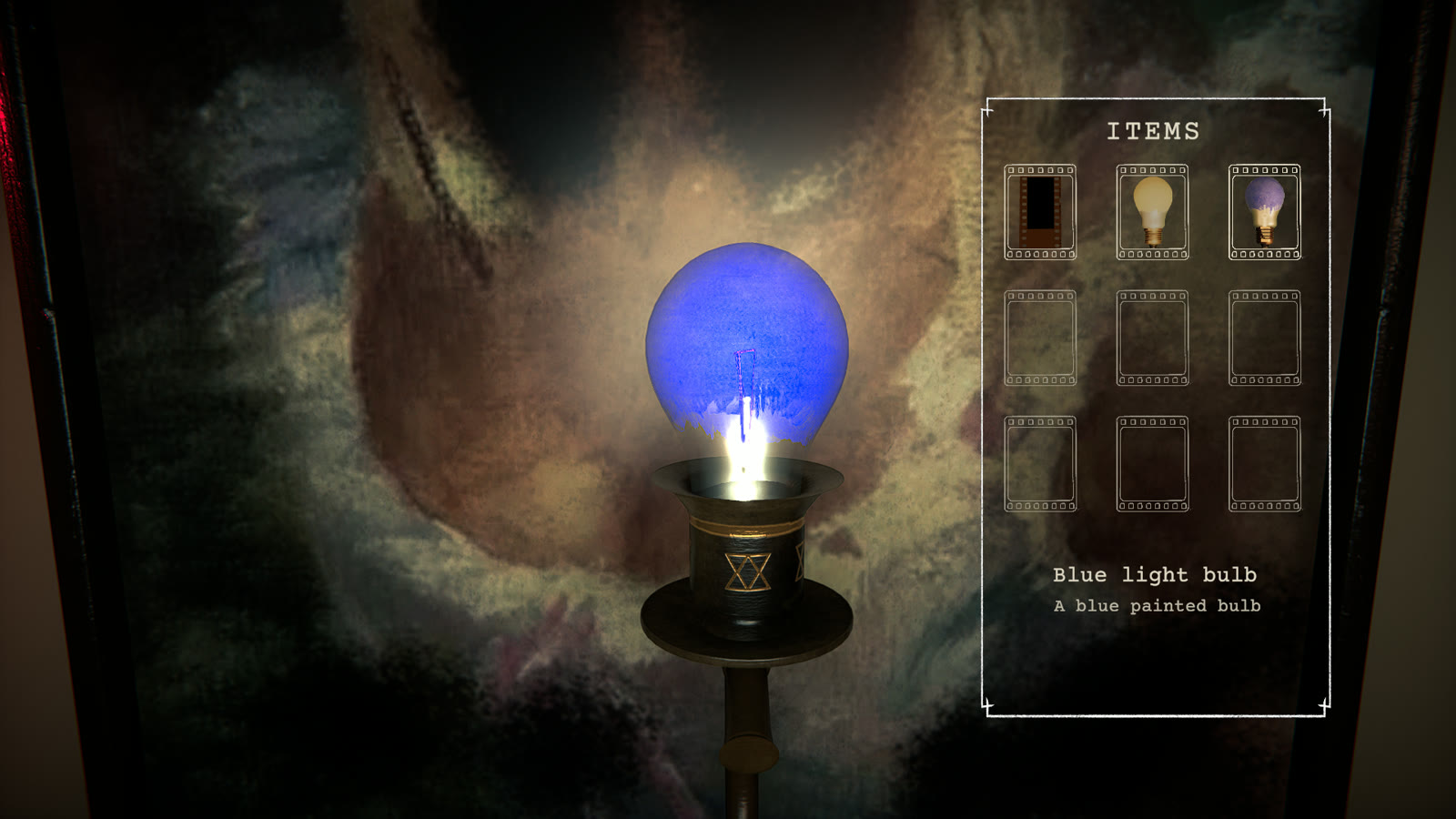
Inventory System

An inventory in Unity (C#) you open at any point to go back over what you have found and inspect it again unhurried: each object is shown in 3D, you rotate it with the mouse over the blurred background and read it alongside its description. The categories are defined by the game — three here, because they are the ones the story needs: usable objects, notes and photographs. All of it persists through the save system, and the photographs can be entered from here too, straight into their memory.

C#UI3D PreviewSave System
UnityMemora

Interactions Menu System

A key and item-selection system in Unity (C#): interact with a locked door and the camera moves in on the lock where it stands, opening a 3x3 grid of the inventory in miniature. You pick with WASD and use with space; a wrong item returns a red flash without throwing you out of the menu, and the right key is consumed, travels to the mouth of the lock and turns. The menu is generic — anything in the world that implements IMenuInteractable uses it, doors, printer, lamp — and each one returns its own verdict on whether the item fit.

C#Interface-DrivenUIInventory
UnityMemora

Scripted Set-Piece System

A framework for scripted set-pieces in Unity (C#): a persistent base class that fires when the player looks towards a point and then orchestrates independent actuators — a warm-light fader, a dying lamp, a desaturation volume, a micro-movement oscillator, the dissociation effect — each one unaware of the others. The moment in the clip is six phases: the corridor's four warm lights die in parallel, the hanging lamp agonises in warm and comes back cold, revealing a figure at the far end, and the audio riser is tuned so its peak lands on the exact frame where the hospital ceiling appears over the house. The composition rule was that the hospital is the noun, the grade is the adjective and the dissociation is the verb, and that everything converges on a single downbeat. The last phase hides the reset under a blink: when you open your eyes the house is normal again and the figure is gone.

C#SequencingLightingAudio Sync
UnityMemora

Physics Door System

Doors with no open button, in Unity (C#): the leaf is a Rigidbody on a HingeJoint and you push it with your body as you walk, so it swings differently depending on where you touch it and how hard. The rule the system runs on is that continuous interaction is physics and the discrete verb is animation — pushing is physics, but the slam when you run in and the close on a key press are animations, so they look the same every time. It covers locked-door feedback, collision layers that follow the state of the leaf, and optional auto-close through JointSpring. On closing, the door sweeps its own path: if you are standing in the doorway it stays open instead of passing through you.

C#PhysicsHingeJointCollision Layers
Internal system — no on-screen interface
UnityMemora

Save System

A JSON save system in Unity (C#): every object in the world decides what persists by implementing an interface, and a component with a stable GUID collects the state of everything sitting on it. It writes to a temporary file first and uses File.Replace, which is atomic and produces the backup in the same operation — if the main file is missing or fails to parse, it recovers itself from the backup. Restoring is multi-pass with a hard cap, because restoring one object can create another: the printer turns a photo on, the lamp instantiates a bulb, and those new arrivals need their state too. It includes a gate that suspends saving while a scripted sequence is running, so no checkpoint can land halfway through a moment and leave the game in an inconsistent state.

C#JSON SerializationAtomic WritesInterface-Driven
UnityListOf20

Investigation Board System

The core mechanic of an investigation game in Unity (C#): photograph clues, pin them to a cork board, and link them with red thread to reconstruct the case. The threads are a physically-simulated Verlet rope running on the UI's own real-time clock, so they keep swinging while the board freezes game time (timeScale = 0). Built entirely with UI Toolkit.

C#UI ToolkitGameplay
Unreal Engine

Third-Person Shooting System

Over-the-shoulder survival-horror shooting in Unreal Engine 5.8 (C++), on GAS: aim, fire, reload, and the infected drops into ragdoll. The shot does not trace when the ability activates — it waits for the montage notify that marks the frame the bullet leaves the barrel, so the shot and the arm agree instead of the enemy falling before the gun has finished coming up. It traces from the camera while the muzzle flash comes from the weapon, and the two disagreeing is the illusion: the reticle sits at the centre of the screen, and a shot genuinely leaving the barrel would miss whatever the reticle covers. Aim assist scores by angle from centre rather than by proximity, and corrects before the spread is applied — never after, or the weapon's cone stops meaning anything.

C++GASGameplay CuesGameplay TagsEnhanced InputAnim NotifiesAutomation Tests
Unreal Engine

Localized Damage System

Localized damage and dismemberment in Unreal Engine 5.8 (C++), on GAS: the shot traces against the enemy's physics asset, so the bone it actually struck is what picks the damage multiplier and the reaction — and past a per-zone threshold the head, an arm or a leg comes off, bones hidden, a cap plugged into the surviving socket and the blood jet parented to it so it follows the body as it falls. The impact plays no animation at all. It is an impulse at the struck bone driven through PhysicsControl on top of whatever the enemy was already doing, and the drive gets weaker at the moment of contact — a fifth of its strength, climbing back over the next second — because a strong drive is a rigid body, and a rigid body has nowhere to put a bullet. Two shots twenty centimetres apart produce two different reactions.

C++GASGameplay CuesPhysics ControlPhysics AssetsNiagaraRagdollAutomation Tests
Unreal Engine

Grid Inventory System

A Tetris-style grid inventory built in Unreal Engine with C++: items occupy multiple cells with drag-and-drop placement, rotation, and stacking, backed by fast slot lookup and collision checks.

C++Gameplay
Unreal Engine

Object Inspection System

A first-person object inspection system in Unreal Engine with C++: pick up and rotate props in 3D to examine them, with smooth camera focus and highlight-on-hover.

C++Gameplay

Testing & Debug Tools

Internal tools for iterating on systems and verifying them without friction. Being able to test a change in seconds instead of minutes changes how many times you test it, and that ends up showing in the result.

The whole suite running green, without the game ever entering Play.

Unity

Unit Test Suite

The problem

Some logic can be verified neither by reading it nor by playing it. Whether an event fires once in so many runs, whether a cooldown really holds, whether the rationing of scares survives a long session — playing it thirty times does not separate a wrong probability from bad luck.

98 EditMode tests over exactly that logic: probabilistic event selection, per-source-type cooldowns, scare rationing, phase gating and an absence budget. To make it testable, the director's engine was written as pure C# with no UnityEngine, taking the clock, the randomness source and the opportunity probe as injected dependencies: in production it gets Unity's clock, in the tests a fake one that jumps time forward. That same decision is what later enabled the match simulator — being able to run 100 thirty-three-minute playthroughs without entering Play comes from the engine never having depended on Time.time.

C#EditMode TestsDependency InjectionPure C# Core

The handle dragged against the Inspector that used to be the only way in.

Unity

Lock Editor

The problem

The key fact was invisible: the point where the key ends up is a world-space offset added to the spawn — three numbers in the Inspector and nothing on screen. The only way to know whether the key went into the lock or buried itself in the wood was to enter Play, look, leave and correct, door by door.

A custom editor for the locks: that point is now a handle you drag in the Scene view, with the key drawn at its origin and at its destination, the path between the two and the arc of the turn, plus a button that plays the whole animation without entering Play.

C#Custom EditorScene HandlesLevel Authoring

A chair and the poses it can settle into: the spread is visible as a range, not guessed from a number in the Inspector.

Unity

Authoring Gizmos

The problem

Tuning how an event moves — how far it turns, where it falls, how much spread it has — meant entering Play to see the result, leaving, nudging a number blind and going round again. In the Scene view a well-configured object and a broken one looked exactly alike.

Authoring gizmos that show in the Scene view what an event is going to do before you ever enter Play: which way an object turns, moves or falls, and with how much spread, without playing it. The cyan ghosts are the poses it will end up in.

C#Editor ScriptingScene GizmosLevel Authoring

From the menu to standing inside the chosen memory, in one unbroken take.

Unity

Jump To

The problem

Checking a change late in the demo meant playing the demo to get there. Thirty-three minutes per iteration, which in practice means you stop iterating: you convince yourself the change is probably fine rather than sit through it again.

A Unity editor tool that boots the game straight into any point of the demo: you pick the memory and the moment from the menu, and seconds later you are standing there with every object the player would be carrying by then — so you test against real state and not an invented one. It is not a teleport. It skips the intro with the flag the game already had, waits for the player and the managers to exist, and loads the memory through the same path the game uses. Loading additively by hand would leave internal state in some arbitrary shape and send you chasing bugs that exist only because of the tool. It lives in Assets/Editor: it does not exist in the build.

C#Editor ScriptingScene LoadingIteration Speed

Editor Tools

Editor extensions that take the friction out of the day-to-day of building a game.

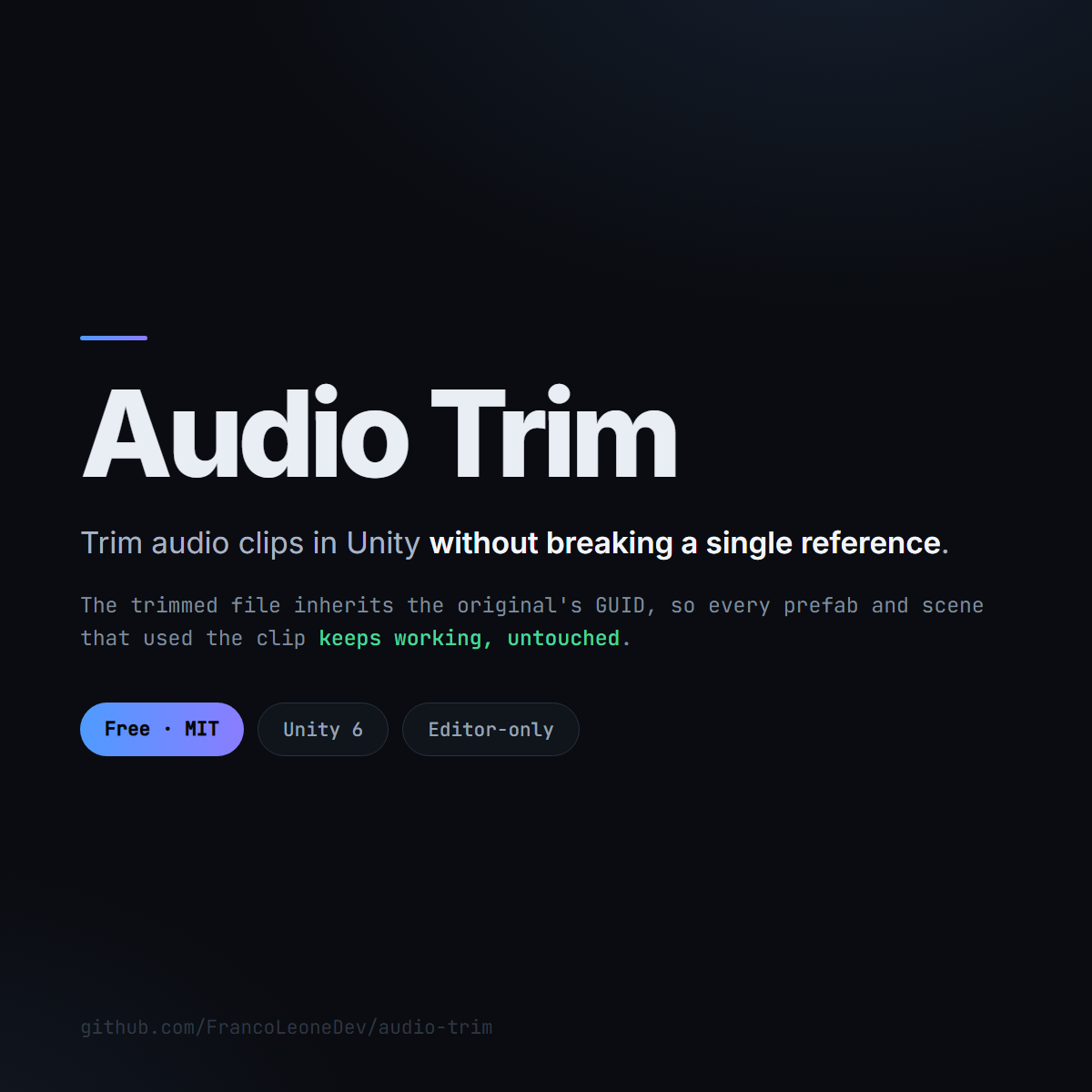
Audio Trim — Audio Trim: trim audio clips in Unity without breaking a single reference in the project.
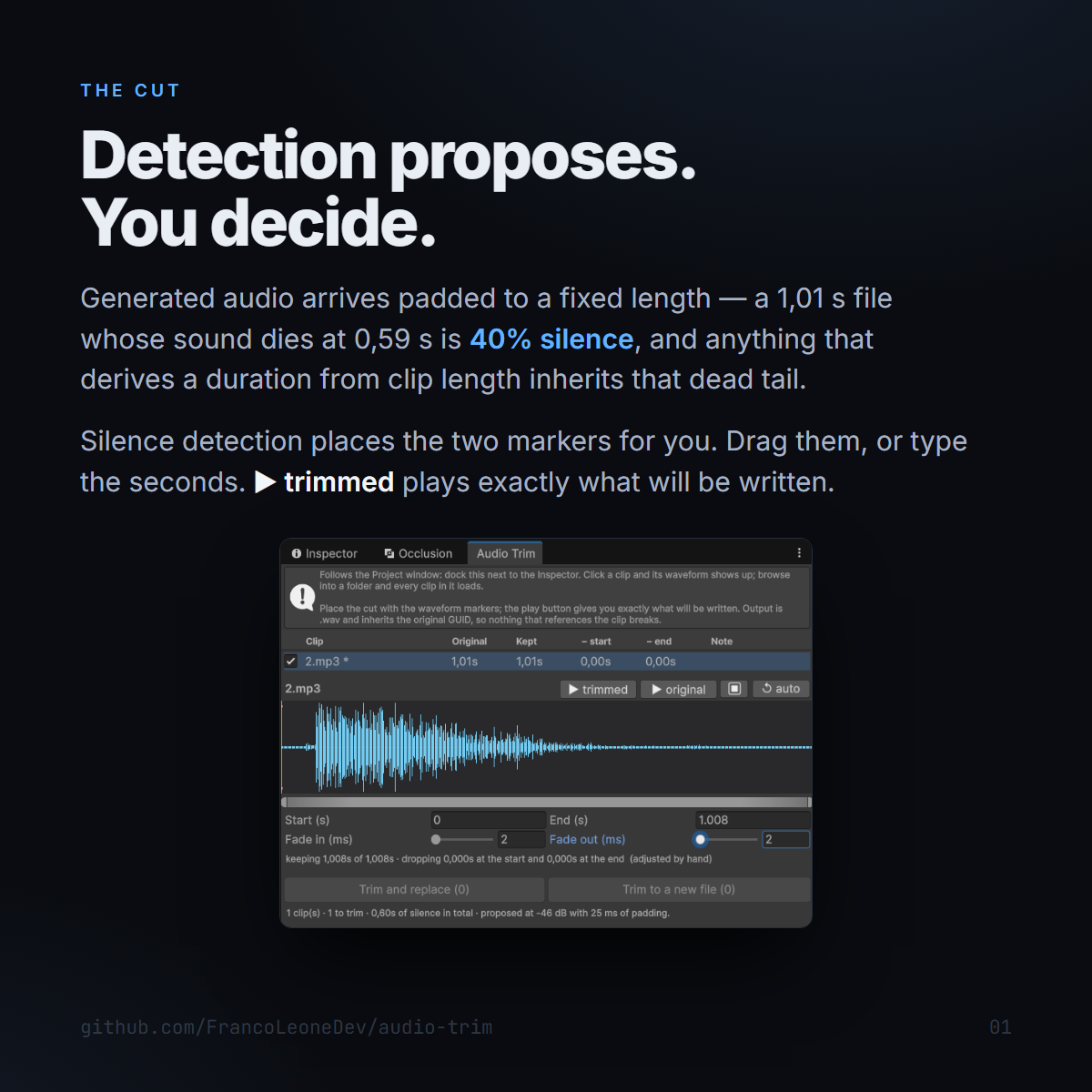
Audio Trim — Generated audio arrives padded to a fixed length — 40% of this 1.01 s file is silence. Detection places the two markers; you drag them from there.
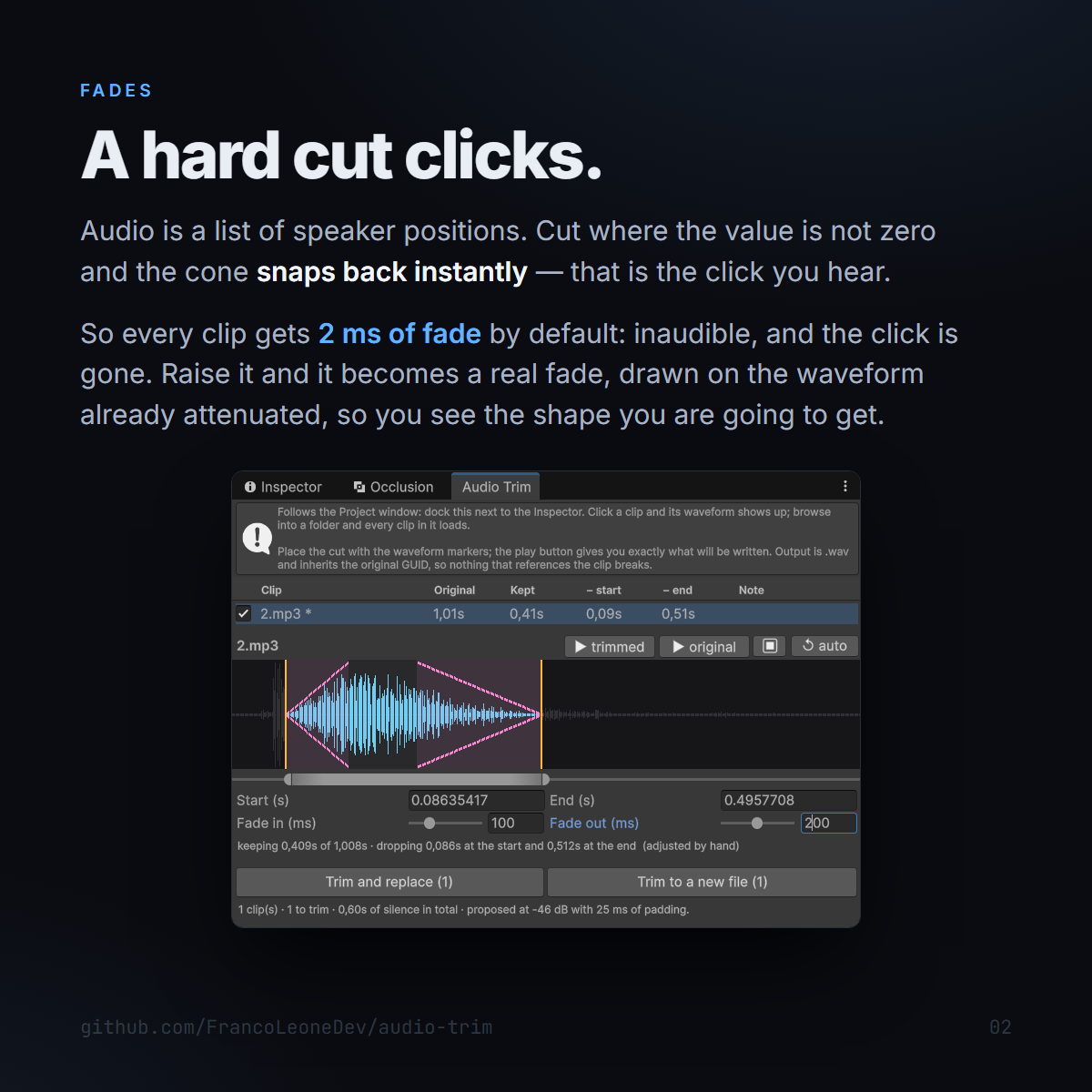
Audio Trim — Why every clip gets 2 ms of fade by default: cutting where the wave isn't at zero makes the speaker cone snap back, and that is heard as a click.
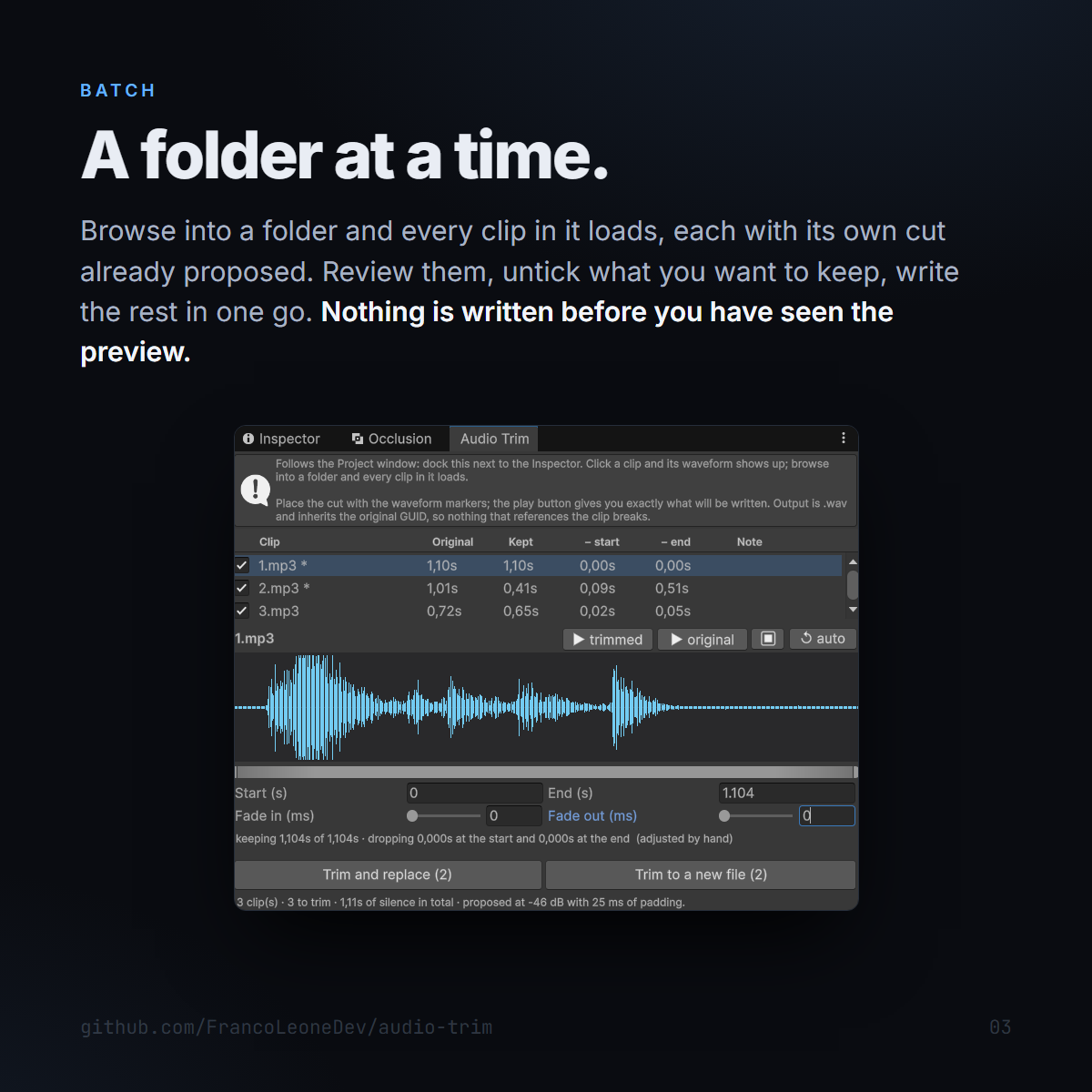
Audio Trim — A whole folder loads at once, each clip with its own proposed cut and its own checkbox. Nothing is written before you have seen the preview.
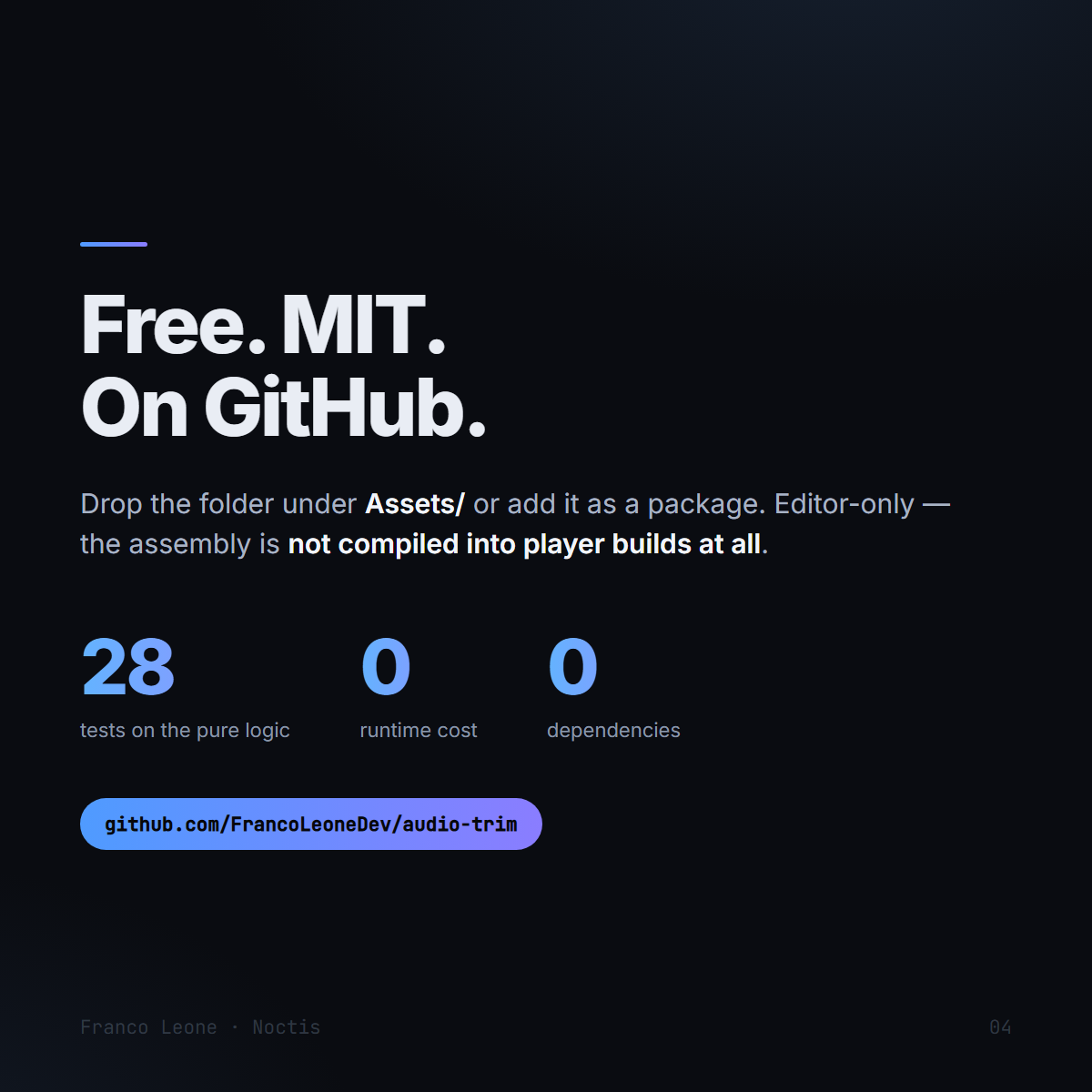
Audio Trim — Free under MIT and editor-only: no dependencies, and the assembly is not compiled into player builds at all.

01Audio Trim: trim audio clips in Unity without breaking a single reference in the project.

Unity

Audio Trim

The problem

Memora's generated sounds arrive exported to a fixed duration and padded with silence — a 3-second file whose sound dies at one and a half. That isn't just ugly: several gestures derive their duration from clip length, so a door set to open "for as long as its creak lasts" kept moving, silently, through all the padding.

A Unity editor extension in C# that does what no external editor can: the trimmed file inherits the original's .meta — same GUID, same import settings — so every prefab and scene that referenced the clip resolves to the new file without being touched. Silence detection proposes the cut instead of imposing it; both markers drag on the waveform, and the play button gives you exactly the range that will be written, with a playhead running over it. Per-clip fades default to 2 ms — inaudible, there only to kill the click any hard cut leaves behind. A whole folder goes at once, always behind a mandatory preview. Output is hand-written 16-bit PCM WAV, because Unity reads mp3 but cannot encode it. Free under MIT and editor-only: the assembly isn't compiled into player builds, so there's zero weight and zero runtime cost.

C#Editor ScriptingAudio PipelineWAV Encoding
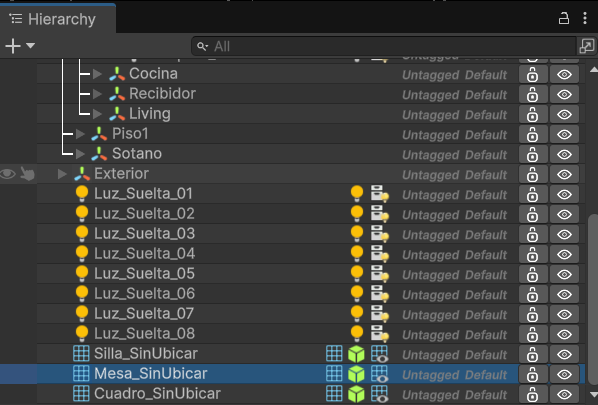
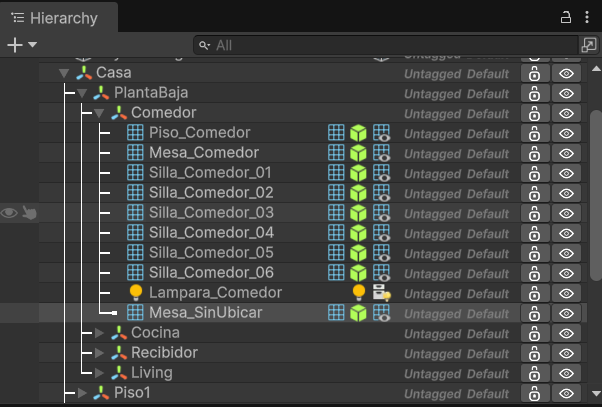
Reparent — The problem: 300+ objects in the hierarchy. Mesa_SinUbicar sits at the bottom while its intended parent is scrolled out of view.
Reparent — The Parent field, injected into the Inspector header below Tag and Layer. No extra window, no separate workflow.
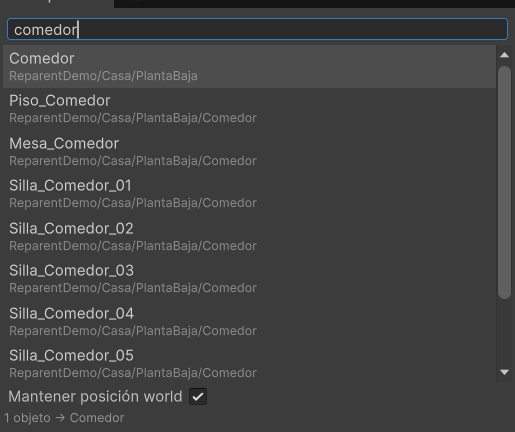
Reparent — Typing filters the entire hierarchy, and each result shows its full path — so a scene full of repeated names stays unambiguous.
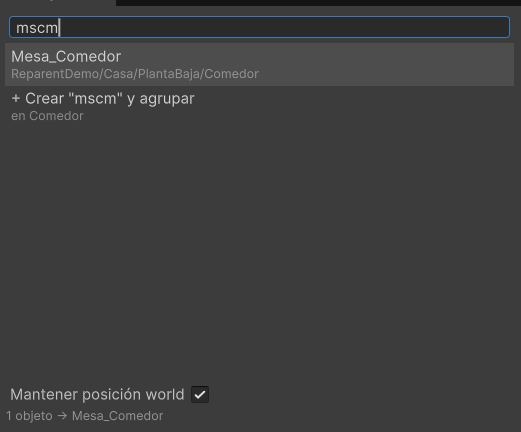
Reparent — Subsequence matching: mscm resolves to Mesa_Comedor. And if the parent doesn't exist yet, create it and group into it inline.
Reparent — Result: the object lands under Comedor and the hierarchy reads cleanly again.

01The problem: 300+ objects in the hierarchy. Mesa_SinUbicar sits at the bottom while its intended parent is scrolled out of view.

Unity

Reparent

The problem

In a scene with 300+ objects, Unity's default reparenting means dragging a row across a hierarchy whose target is scrolled off-screen — slow, easy to drop in the wrong place, and painful to repeat.

A Unity editor extension in C# that adds a Parent field to the Inspector header — right where Unity should have put it, instead of behind another window. Three ways in: the field itself, a right-click entry on the object, or Ctrl+Shift+H. Typing searches the whole hierarchy with subsequence matching, so mscm resolves to Mesa_Comedor, and every result carries its full path so repeated names stay unambiguous. If the parent doesn't exist yet, you create it and group into it without leaving the field. It works on multi-selections, a toggle controls whether world position survives the move, and every reparent is one Ctrl+Z away.

C#Editor ScriptingInspector ExtensionFuzzy Search

Web Development

Full-stack web applications and e-commerce platforms built with modern technologies.

Cookizza
Completed
Featured

Cookizza

ABK SolutionsSole developer

Production e-commerce for Cookizza, a family-run artisanal cookie shop in Floresta, CABA. A Next.js + Supabase storefront with a build-your-own "Cookizza" configurator (base, toppings and sauces chosen slice by slice), a cookie catalog with single cookies and mixed boxes, a persistent cart, an events section, an Instagram feed, and a WhatsApp checkout offering delivery across CABA or pickup in Floresta — plus an admin panel for managing the catalog.

Next.jsTypeScriptReactSupabaseTailwind CSSFramer MotionVercelE-commerce
Papelera Bahía
Completed
Featured

Papelera Bahía

ABK SolutionsSole developer

Production e-commerce for a CABA-based wholesale supplier of disposable food-service and packaging products. A Next.js + Supabase storefront with catalog search, category and material filters, real-time stock, a persistent cart, and a WhatsApp checkout that builds each order server-side with a verified total.

Next.jsTypeScriptReactSupabaseTailwind CSSFramer MotionVercelE-commerce
ABK - Game Studio & Software Agency
Completed
Featured

ABK - Game Studio & Software Agency

ABK SolutionsSole developer

Corporate site for ABK, the Argentine studio I do freelance work for, which runs two divisions under one roof: ABK Games, that develops and publishes its own titles, and ABK Solutions, that builds custom software for clients. The odd one out among my projects — no catalog, no cart, no checkout. It's a multi-page institutional site with a projects gallery that mixes games and client work in a single card system with per-division tagging, an areas section that splits the two halves of the business, a careers page, a news section, and an EN/ES switch. The hard part was structural rather than technical: finding one layout that presents a game studio and a software agency as the same company without either half reading as an afterthought.

Next.jsTypeScriptReactSupabaseTailwind CSSFramer MotionVerceli18nCorporate Site
Sagis - Artisanal Bakery E-commerce
Completed
Featured

Sagis - Artisanal Bakery E-commerce

Independent projectSole developer

Full-stack e-commerce platform for an artisanal bakery featuring product catalog, shopping cart, Instagram feed integration, and WhatsApp ordering system. Built with modern web technologies and deployed on Vercel.

Next.jsTypeScriptReactSupabaseTailwind CSSFramer MotionVercelE-commerce
Lucas Nocquet - 3D Artist Portfolio
Completed
Featured

Lucas Nocquet - 3D Artist Portfolio

Lucas NocquetSole developer

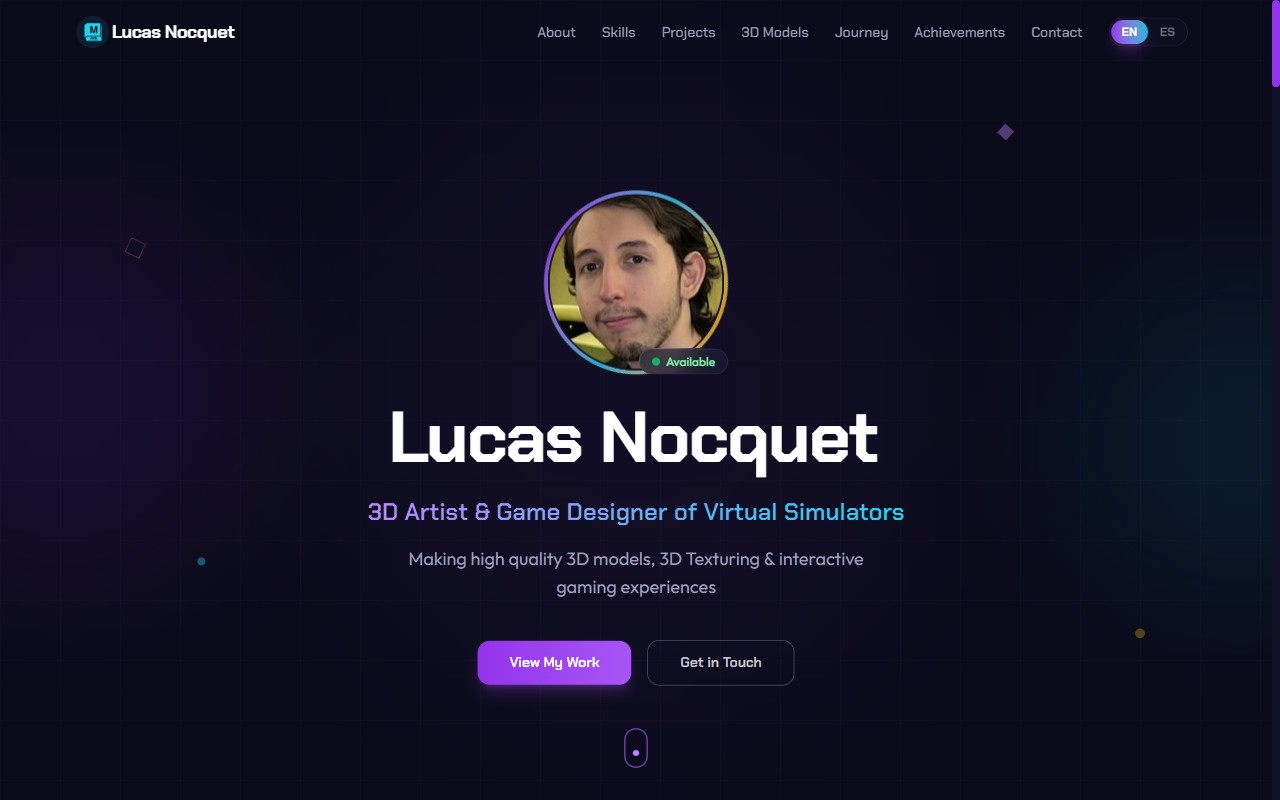
Portfolio site for a 3D artist and game designer of virtual simulators. A dark single-page build in Next.js with an EN/ES switch that runs entirely client-side — no routing, no middleware, the choice kept in localStorage — so every string, content included, is typed as a localized pair. The headline project gets a full-width spotlight above the regular grid; the 3D models gallery links each render straight to its Sketchfab viewer; and the skills board, the education timeline and the certifications each get their own section. Static export deployed on Vercel.

Next.jsTypeScriptReactTailwind CSSFramer MotionVerceli18nPortfolio
AiFA - Amateur Football Association
Completed
Featured

AiFA - Amateur Football Association

Nimbex LabsBackend, in a team

Institutional platform for AiFA, the largest amateur football association in Argentina: 140+ clubs, 3,600+ registered players and tournaments across four divisions, plus Recopa and Supercopa. I worked mainly on the backend — the disciplinary tribunal, the news portal, the yearbook, and real-time PDF generation for squad lists and match sheets — and also contributed to the frontend. Built at Nimbex Labs together with the team.

Next.jsTypeScriptReactSupabaseTailwind CSSFramer MotionVercelSports Platform
Nimbex League - Amateur LoL Tournaments
Completed
Featured

Nimbex League - Amateur LoL Tournaments

Nimbex LabsFull stack, in a team

Competitive tournament platform for amateur League of Legends players in Latin America: persistent teams, 5v5 and 1v1 tournament registration, automatic brackets, scrims, result validation, player profiles with stats, rankings and subscriptions, with email, Discord and in-app notifications. I worked across the full stack with support from the team, at Nimbex Labs.

Next.jsTypeScriptReactSupabaseTailwind CSSFramer MotionVercelEsports
Catálogo + Panel de Inventario
Completed
Featured

Catálogo + Panel de Inventario

Independent projectSole developer

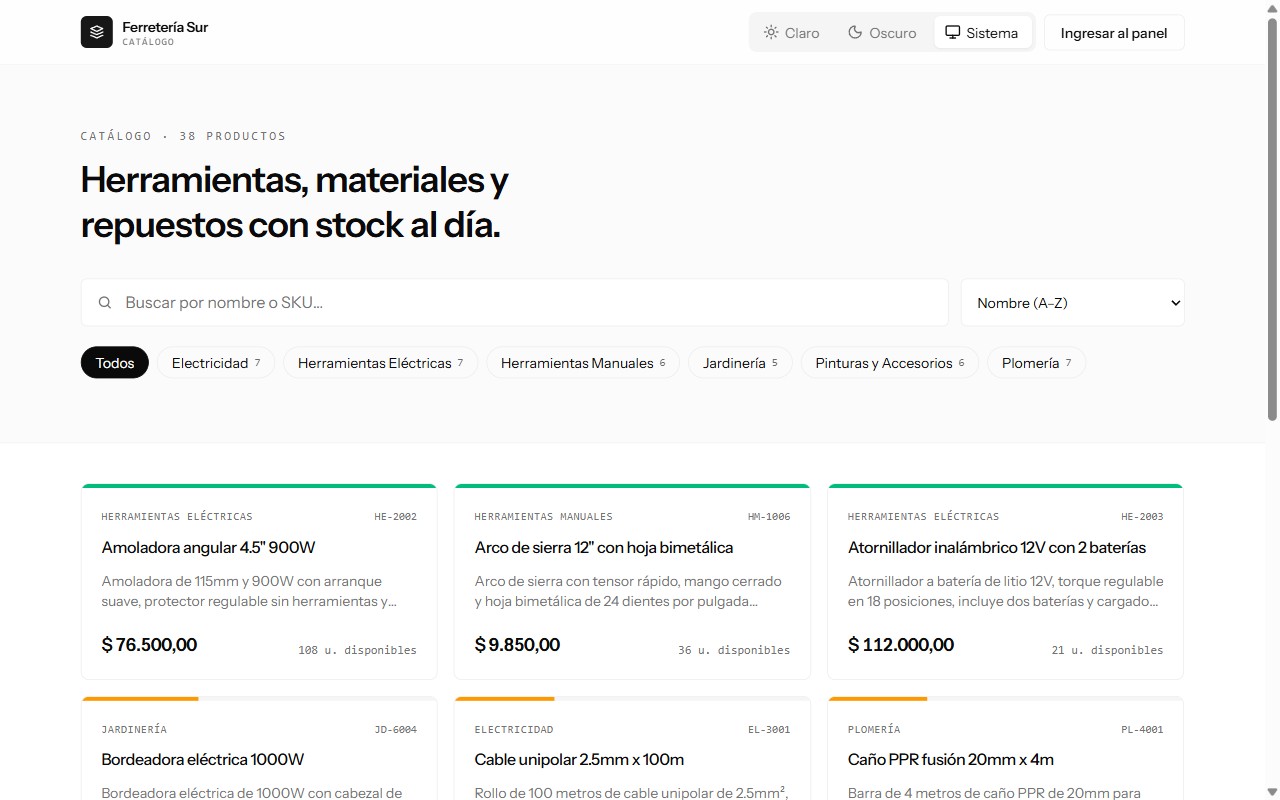
Catalog and inventory back office for a hardware store, built as a Laravel + Inertia + Vue 3 monolith on MySQL. The public side lists 38 products across 6 categories with search by name or SKU, category filters, sorting, server-side pagination, per-product stock and a low-stock warning; it also ships a light/dark/system theme switch. Behind the login sits the admin: products, categories and stock movements. The design decision I like most is that stock is not an editable field — it is derived from a movement table, so every change carries a reason and a date and the current figure can always be explained. Demo credentials are shown on the login screen and pre-filled, so anyone can walk into the panel.

LaravelPHPVue.jsInertiaMySQLTailwind CSSAdmin Panel
API REST + SPA de Gestión de Tareas
Completed
Featured

API REST + SPA de Gestión de Tareas

Independent projectSole developer

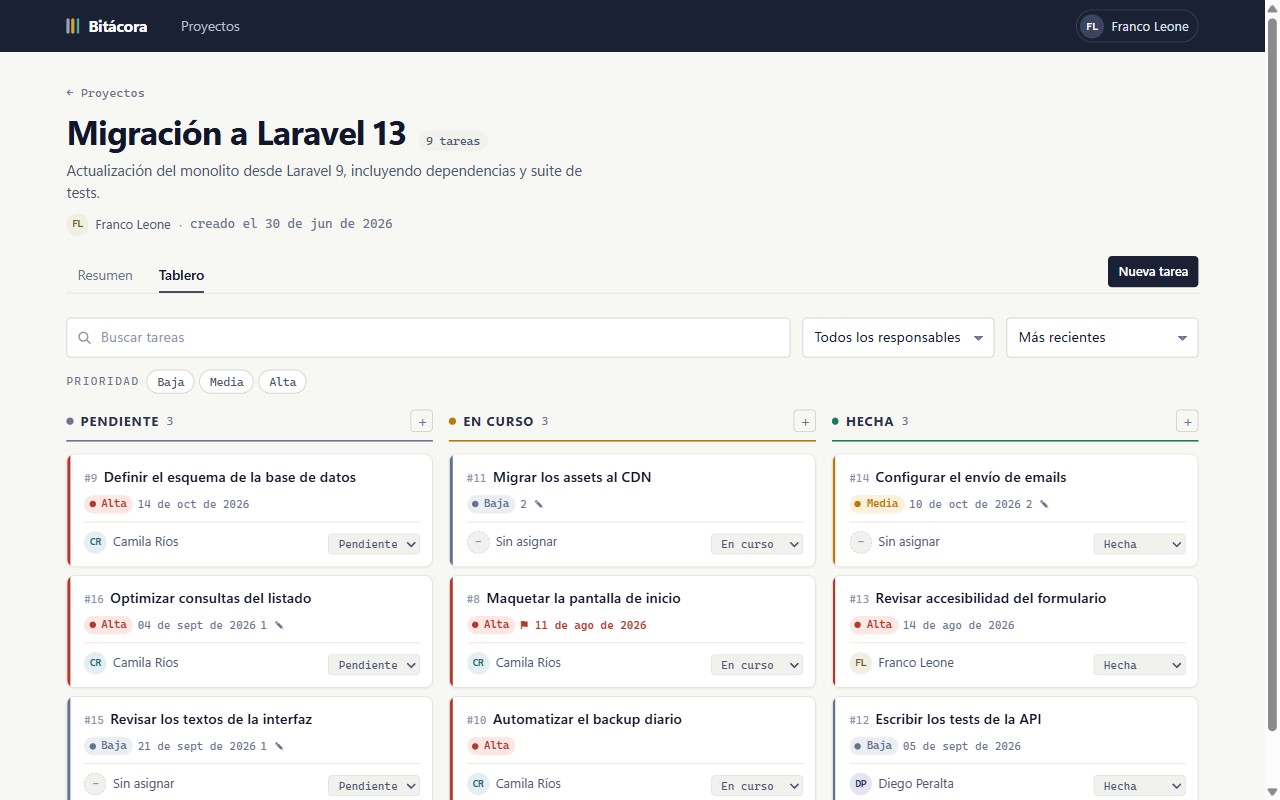
Bitácora, a project and task manager built with a deliberately decoupled architecture: a versioned Laravel REST API with token auth on one side, and a standalone Vue 3 SPA with Vue Router and Pinia consuming it over HTTP on the other. The board runs three states with priorities, assignees, due dates and comments, filtered by assignee and priority and searchable. The API returns API Resources rather than raw models, validates in Form Requests and authorizes with Policies, so a user cannot reach another user's projects. Queued jobs handle assignment notifications, and the Pest suite covers auth, the task CRUD and — the tests that matter most — that the authorization cannot be bypassed. The login offers a one-click demo account.

LaravelPHPVue.jsPiniaREST APIMySQLPest
Sistema de Reservas de Turnos
Completed
Featured

Sistema de Reservas de Turnos

Independent projectSole developer

Appointment booking for Nova Studio, a hair salon, on Laravel + Inertia + Vue 3 with MySQL. Three surfaces: a public flow that walks a client through service, day and time; a customer area to see and cancel their own bookings; and an admin agenda for the day and the week, plus services, opening hours and booking states. Available slots are computed from the opening hours minus what is already booked and the service duration — they are not a pre-seeded table, so the client only ever sees times that are genuinely free. The interesting part is preventing double booking: validating before inserting leaves a race window where two simultaneous requests both pass, so the booking is created inside a locking transaction, with a uniqueness constraint in the database as the last line of defence. The login screen offers one-click admin and customer demo accounts.

LaravelPHPVue.jsInertiaMySQLTailwind CSSBooking System
Dantofema - Software Development Company
Completed
Featured

Dantofema - Software Development Company

DantofemaAssistant, third-party project

Software development company website showcasing custom development services, consulting, and modernization solutions. Features service portfolio, client showcase, and contact system. A third-party project I did not build: I collaborated as an assistant, and it is shown here as exposure to the stack, not as my own work.

PHPLaravelMySQLJavaScriptVue.js
FIP Latina Press - Journalism Portal
Completed
Featured

FIP Latina Press - Journalism Portal

DantofemaAssistant, third-party project

News and information portal for the International Federation of Journalists in Latin America. Features journalism news, union updates, campaigns, and syndicated content with a focus on press freedom and journalists' rights. A third-party project I did not build: I collaborated as an assistant, and it is shown here as exposure to the stack, not as my own work.

LaravelPHPJavaScriptCMS

Skills & Technologies

A comprehensive toolkit spanning game development, web development, and modern DevOps practices.

Game Development

Unity
C#
Unreal Engine
C++
Photon Fusion

Frontend Development

React
Next.js
Vue.js
HTML
CSS
Tailwind CSS
Framer Motion

Backend Development

TypeScript
JavaScript
Node.js
Python
PHP
Laravel
PostgreSQL
MySQL
Supabase

Tools & DevOps

Docker
Git
CI/CD (GitHub Actions)
Linux/Bash
n8n
Vercel
Always learning new technologies

Experience

My professional journey and the roles that have shaped my career.

2026 - Present

Web Developer (Freelance)

ABK Solutions

  • Building full-stack web applications end to end as the sole developer
  • Owning the full delivery: data model, server logic, and interface
TypeScriptReactNext.jsSupabase
2025 - 2026

Software Fullstack Engineer

Nimbex Labs

  • Developing full-stack web applications using modern technologies
  • Building scalable backend services and responsive frontend interfaces
ReactTypeScriptNode.jsPostgreSQL

Education

My formal training, and the courses I keep taking to stay current.

2022 - 2026Graduate

Higher Technical Degree in Virtual Simulator Design and Programming

Escuela Da Vinci · Buenos Aires, Argentina

A three-year official degree in videogame design and programming, built around engine programming and simulation: engine application and engine programming, Artificial Intelligence I and II, models and algorithms, applied physics, network development and level design, closing with a final project. Escuela Da Vinci is recognized by Epic Games as an Education & Training Partner for Unreal Engine. It is the formal grounding under the gameplay systems and editor tools shown above.

Certifications

Courses completed outside the classroom, each with its verification link.

Udemy2026

Lighting in Unity

by Pete Jepson

View credential
Udemy2025

Builder-Defender Game in Unity

by Code Monkey

View credential
Udemy2025

Unity Dialogue & Quests: Intermediate C# Game Coding

by Rick Davidson, GameDev.tv Team

View credential
Udemy2025

Unity Turn-Based Strategy Game: Intermediate C# Coding

by GameDev.tv Team, Code Monkey

View credential
Udemy2025

Unity Parkour & Climbing System

by Fantacode Studios

View credential

Get In Touch

I'm always open to discussing new projects, creative ideas, or opportunities to be part of your vision.

Let's work together

Whether you have a project in mind, want to collaborate on something cool, or just want to say hi, I'd love to hear from you. Feel free to reach out through any of the channels below.

Email

francoleone.dev@gmail.com

Location

Buenos Aires, Argentina

Find me on

Ready to start a project?

I'm available for freelance work and exciting opportunities. Let's create something amazing together.

Currently available for new projects